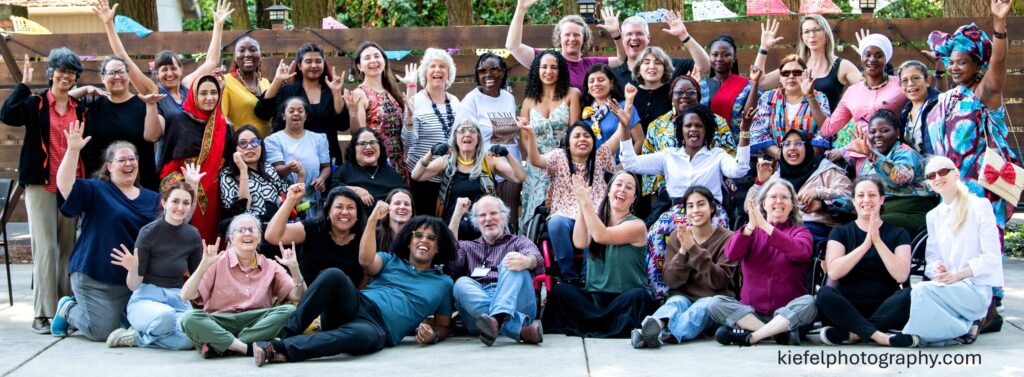
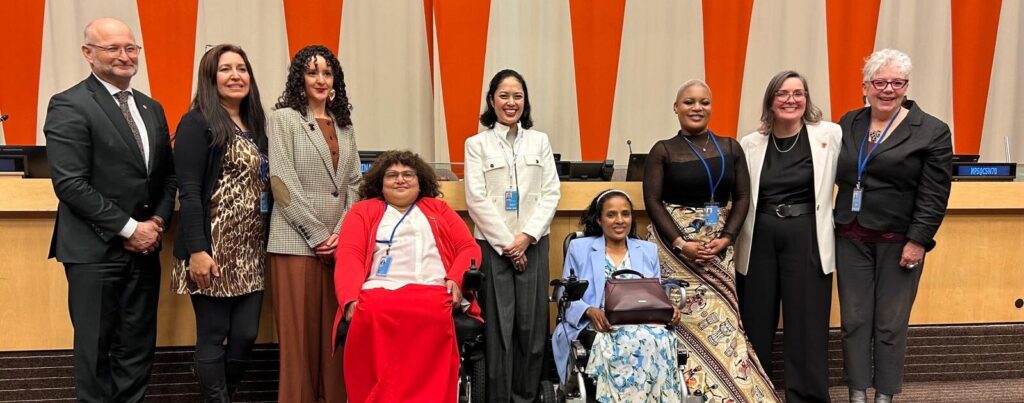
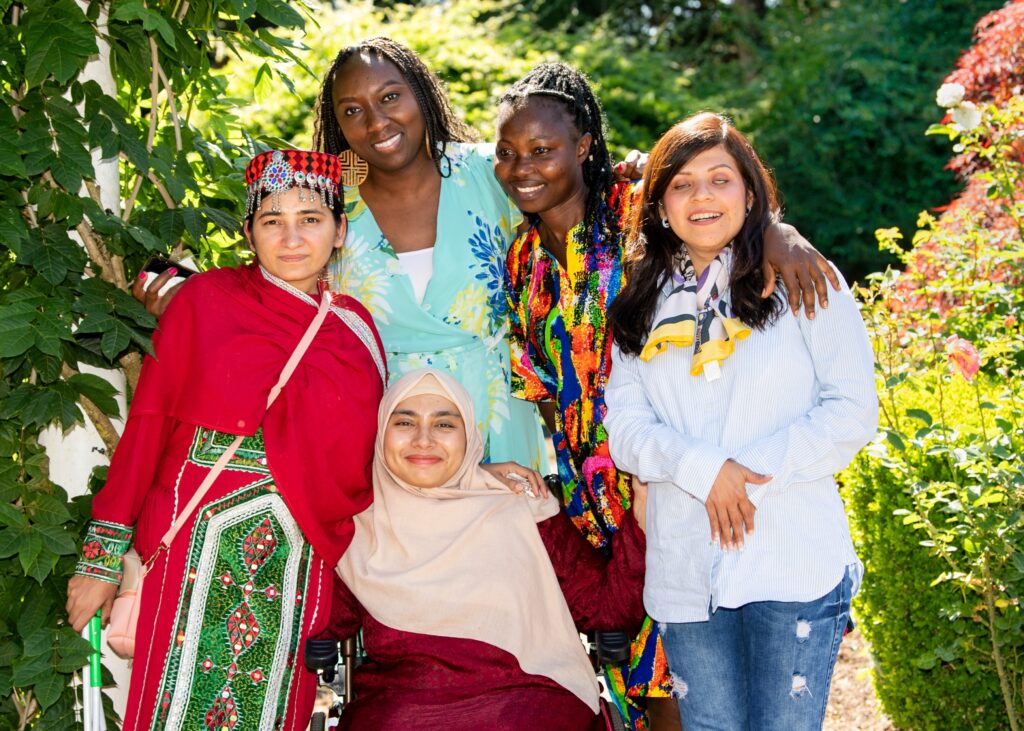
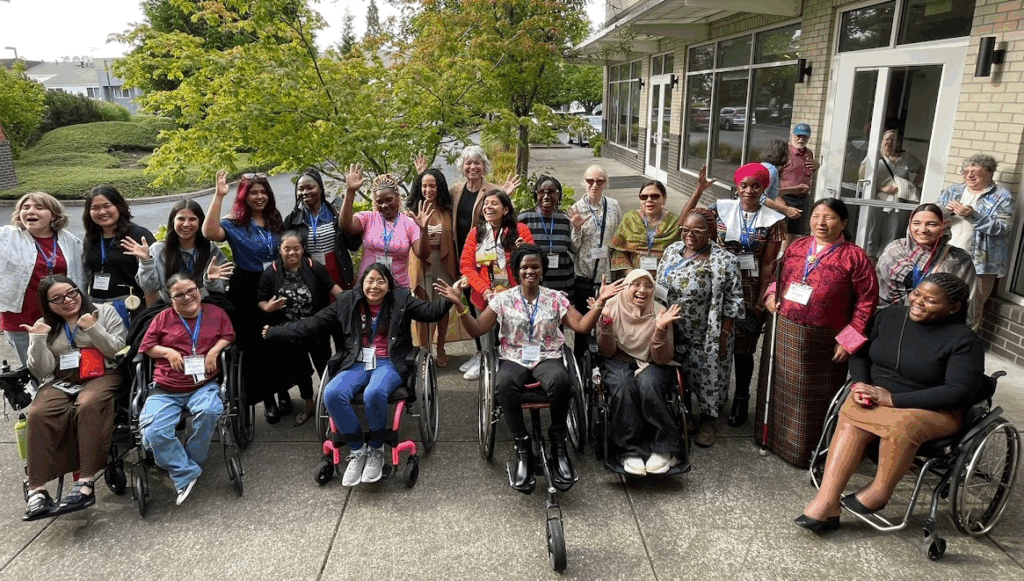
MIUSA’s virtual parallel event featured a global panel of three distinguished women leaders with diverse disabilities who are advancing efforts to prevent and respond to gender-based violence in their countries. The panelists were all alumni of the Women’s Institute on Leadership and Disability (WILD), MIUSA’s signature program that has trained thousands of women worldwide. Speakers discussed how WILD strengthened their leadership and advocacy skills and shared examples of disabled women-led initiatives on gender-based violence and access to justice.
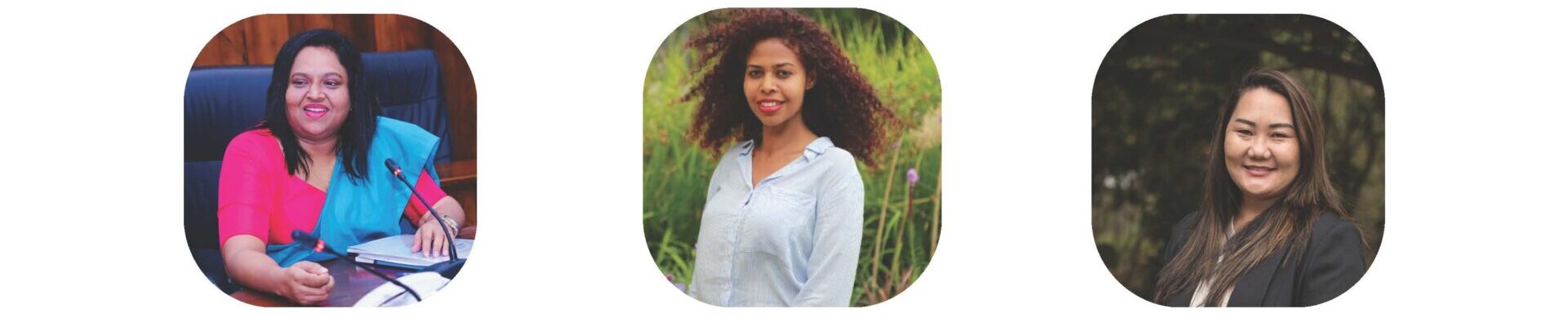
Across Sri Lanka, Rasanjali’s organization, the National Forum of Women with Disabilities (NFWD), is working to transform how women with disabilities access safety, justice, and leadership opportunities. Using a community-driven approach, NFWD is addressing the urgent barriers many women face when seeking help, especially survivors of gender-based violence.
As a powerful example, Rasanjali shared the experience of Deaf women, who often do not have access to sign language interpretation when they try to communicate with police, hospitals, or legal services, leaving them isolated and unsupported. In response, the organization launched an initiative providing free sign language interpretation, ensuring that Deaf women can report violence, clearly share their experiences, and access the services they need.
This initiative and other similar efforts are improving access to justice while also restoring dignity and agency to women who have long been excluded from critical support systems. Women who once felt isolated are now feeling the support of their communities, and finding opportunities to share their knowledge with others, and supporting other women with disabilities navigating their own barriers.
As Rasanjali shared: “Many participants are now sharing information with other women and encouraging them to claim their rights”.
In Ethiopia, Martha and the Ethiopian Women with Disabilities National Association are addressing gender-based violence against women with disabilities with important grassroots efforts.
In one example Martha highlighted, women with disabilities in Gondar received training on their sexual and reproductive health rights, how to recognize and report violence, and how to seek support services.
This initiative brought together women with disabilities, disabled peoples’ organizations (DPOs), police, healthcare workers, and other community leaders, who often lack understanding of disability inclusion, resulting in cases being overlooked or mishandled.
Martha attributes the success of this project to the leadership of women with disabilities themselves: “They [disabled women] were not only participants but also trainers, advocates, and community mobilizers. Their lived experiences helped service providers better understand the real barriers women with disabilities face.”
In Mongolia, Dulamsuren and the Culture Centre of the Deaf are challenging long-standing barriers of exclusion by reshaping how society understands the experiences of Deaf women. Many Deaf women continue to face significant challenges, including gender-based violence, due to limited access to information in sign language, as well as broader social exclusion linked to misperceptions of deafness, sign language, and Deaf culture.
The Culture Centre of the Deaf is using creative advocacy approaches to address these challenges. Using various media and artforms, the Culture Centre of the Deaf is creating awareness and education to empower Deaf women, and other women with disabilities, to be proud of their identity and culture, in a broader effort to help their communities, and society, better understand their lived experiences.
In 2026, they held a National Deaf Women’s Conference with the theme “Equal Participation and Equal Culture”. A highlight of the conference was a photo exhibition that featured Deaf women working in education, healthcare, and the food industry, showcasing their skills and contributions. Dulamsuren also worked with MIUSA to produce a short documentary on gender-based violence and women with disabilities during the COVID pandemic, which was widely used as an important community education tool.
Dulamsuren is passionate about using diverse tools to advance the rights of disabled women: “You don’t have to focus only on law. You can also focus on art, or culture. There are many ways, many facets you can use to actually make positive changes to empower women and change the future of women”.
Session attendees described their own work combatting gender-based violence in their countries.
Rama from Nepal worked closely with the Human Rights Commission, Inclusive Commission, and Ministry of Women, to advocate for national guidelines that would remove barriers preventing women with disabilities from accessing justice.
Madalina from Romania worked with the National Council on Disability and Romanian police to develop policies to improve access by people with disabilities to the justice system. She also led and designed a national survey of women with disabilities on reproductive health, sexual health, and safety.
Muskan from India addressed the undermining of rights of women and girls with disabilities in the justice system, through community-based legal literacy, sexual and reproductive health and rights, and mental health advocacy.
Many more women from across the globe shared similar experiences and initiatives, all passionate about working towards eliminating gender-based violence and promoting the rights of disabled women.
In response to common themes that emerged across initiative and countries, MIUSA offers five calls to action from this panel and discussion:
Thank you to Rasanjali, Martha, and Dulamsuren for sharing with us your extraordinary efforts to lead the global fight against gender-based violence and empower women with disabilities to be changemakers in their own countries. Thank you to members of our WILD community for participating in this panel and discussion. Your voices are invaluable.