
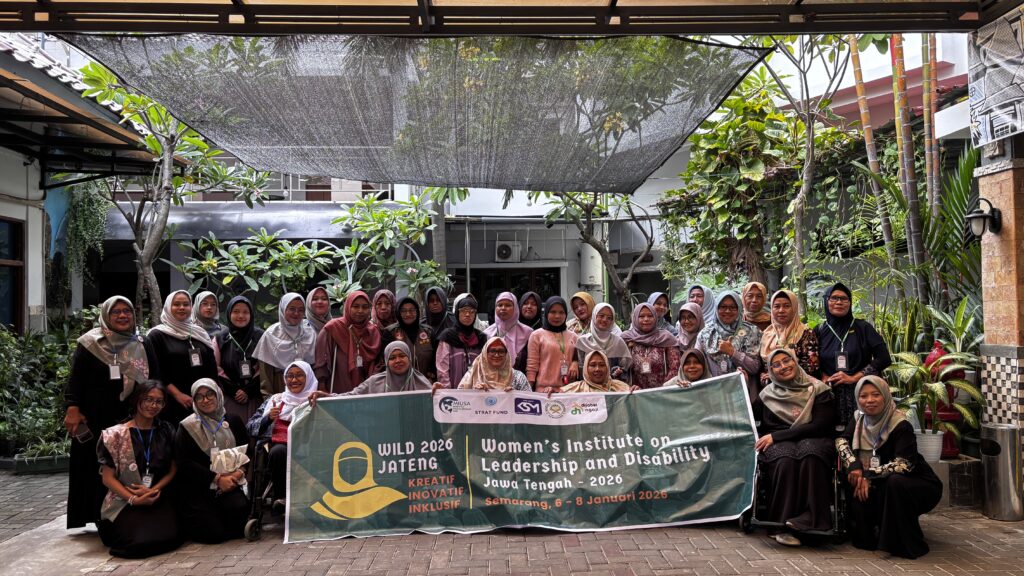
Participants arriving from rural and urban areas included students, activists, entrepreneurs, and housewives, representing a range of ages, backgrounds, and disabilities. Many began the training seated next to those they felt most similar to, unsure of what to expect.
During the first training module, Leadership and Disability Advocacy, two disability advocates presented to the group about their journeys and strategies for leading disability advocacy initiatives. As stories were shared, WILD participants listened carefully and began to open up about their own experiences and aspirations.
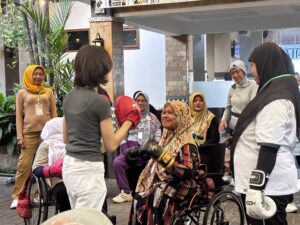 Next, it was time for an empowering Muay Thai and self-defense training. The “Fierce Combat” coach demonstrated techniques the women could use to protect themselves, adapted for participants of all disabilities, and then handed out colorful boxing gloves for some Muay Thai combat exercises. Smiling and laughing, the participants took turns practicing their punches with the coach and excitedly cheered each other on when they landed a strong hit.
One participant reflected: “I became braver and more confident when I had to be alone/without a companion because I had the knowledge to defend myself.”
That evening, participants were paired up so that everyone had a ‘support buddy’ with a different type of disability. These pairings helped participants gain confidence to work with women of different backgrounds and build deeper connections, laying the groundwork for advocacy group projects on Day 2. With guidance from an AI and Cyber Security training, each group of 4-5 planned out a technology-supported Action Plan for advocacy projects ranging from making a documentary to reduce stigma towards disabled people to delivering health care access trainings for women with disabilities.
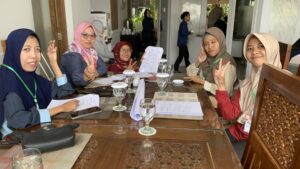 By the final day’s Art Performance, Public Speaking Workshop, and Project Presentations, the room felt transformed. One participant happily reflected: “In project-making exercises, it’s easier to think because we’re helped by ideas from group members. Where we lack or have little competence, others can fill the gap.”
Reflecting on the experience, Aisyah shared: “The experience was challenging, yet precious. Many unexpected things happened, even before the event… So, I learned a lot about making decisions between participants’ preferences, needs, and our limited resources… [I] hope to have more opportunities to grow with them [the facilitator team] and our disability community members.”
Over the next three months, participants will implement their action plans, carrying forward the confidence and cross-disability solidarity they built together.
The WILD-Indonesia training was a follow-on activity from WILD 2025. Read more about the impact of the WILD 2025 program.